Responsible AI in Education
June 2025
As AI rapidly enters classrooms with little oversight or community input, vulnerable students face growing risks of surveillance, bias, and lost opportunity. The Schott Foundation's Responsible AI Collaborative brought together grassroots coalitions, civil rights organizations, philanthropy, and technology stakeholders to address these equity concerns. Through a co-design process, they developed tools and principles that help parents, educators, and students evaluate AI systems, demand transparency, and advocate for practices that center student wellbeing.
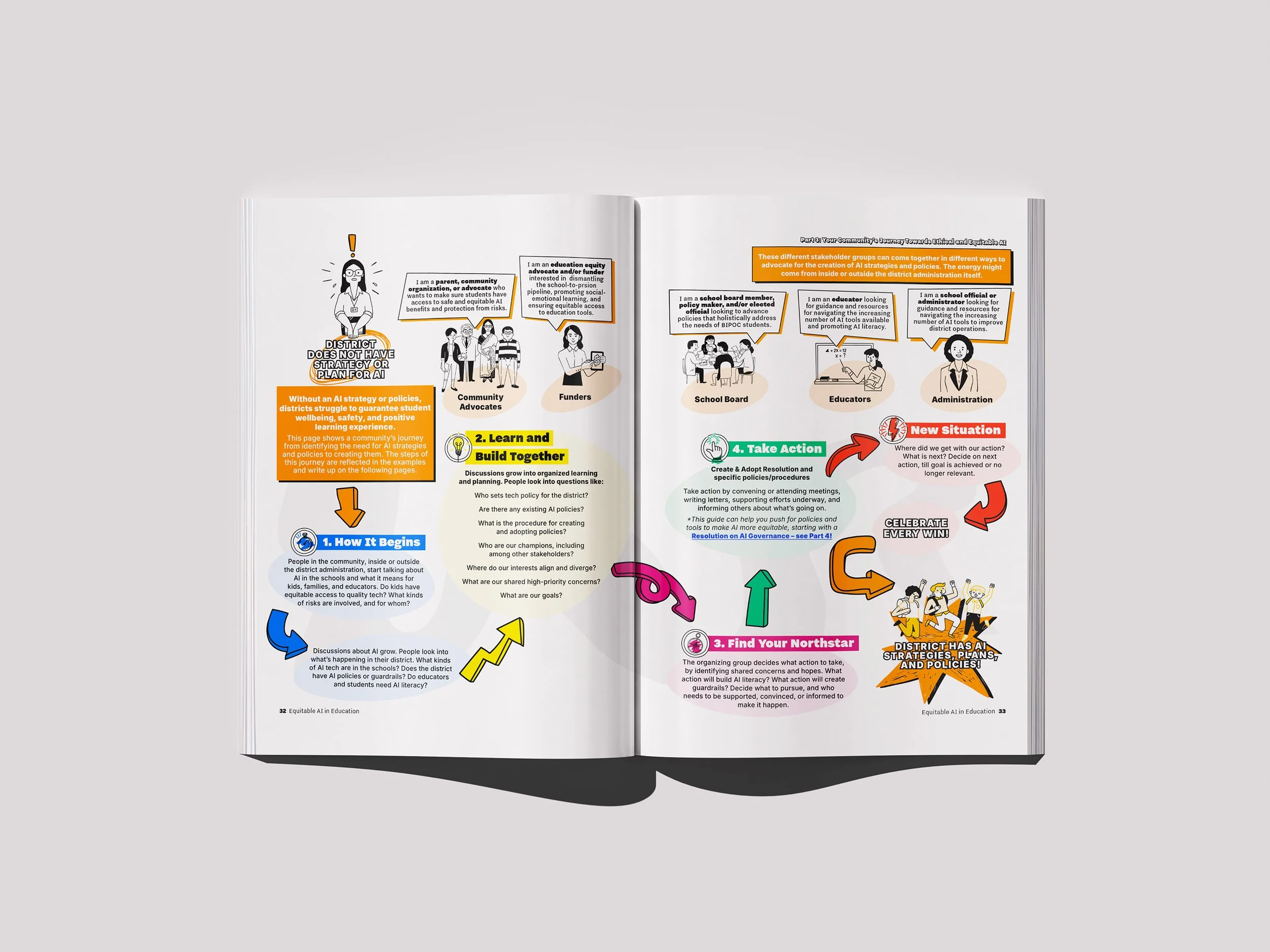
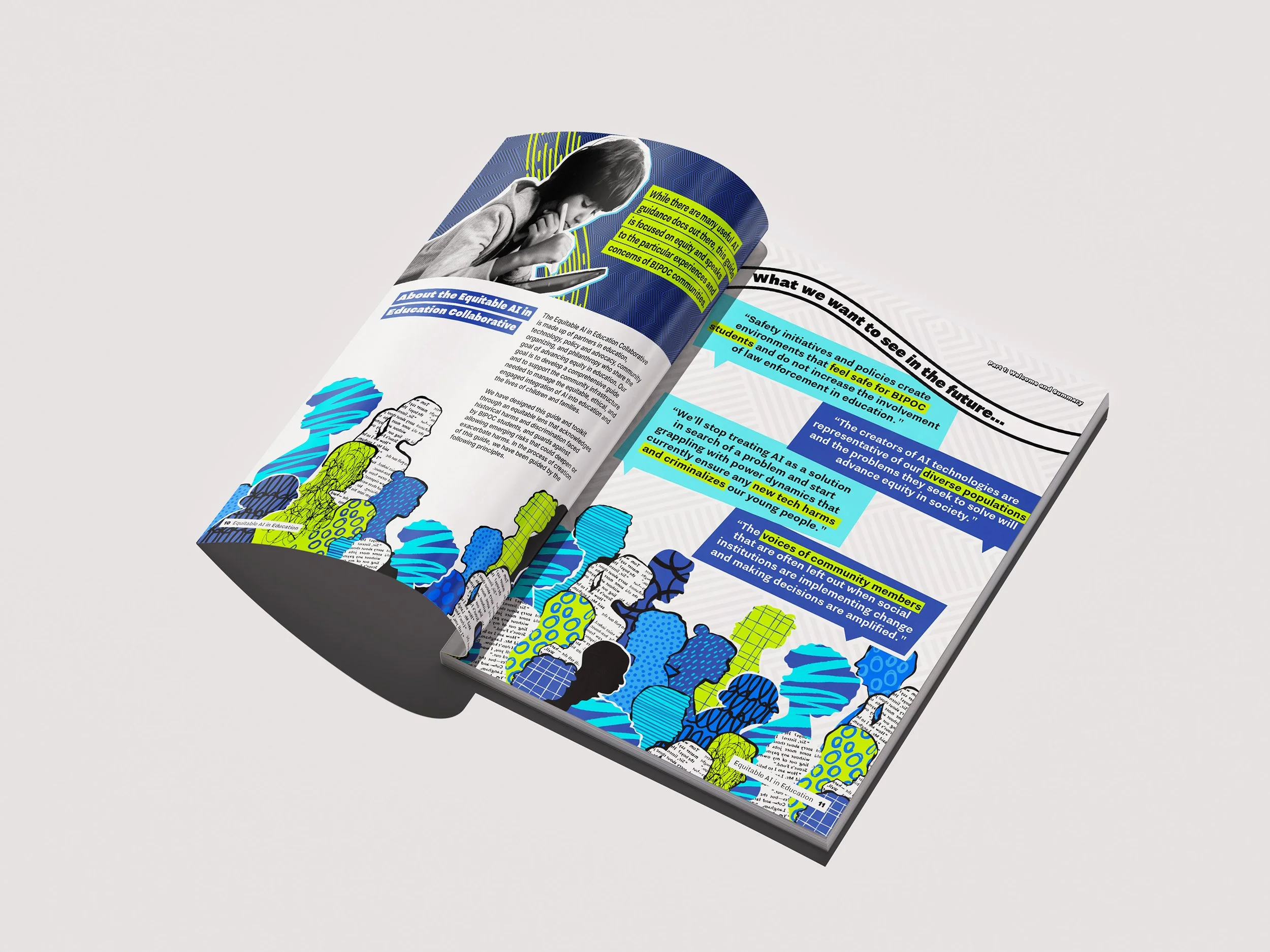
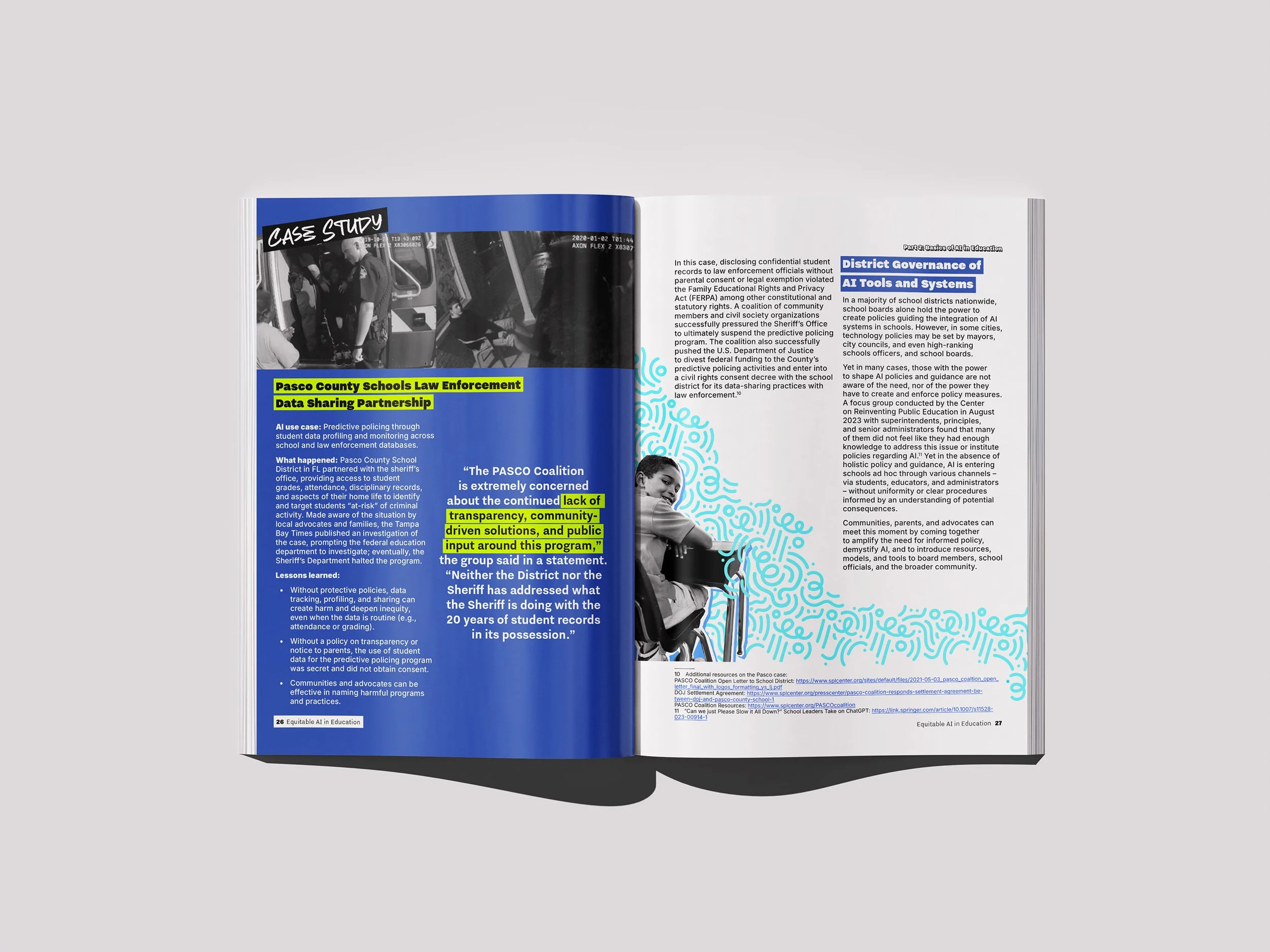
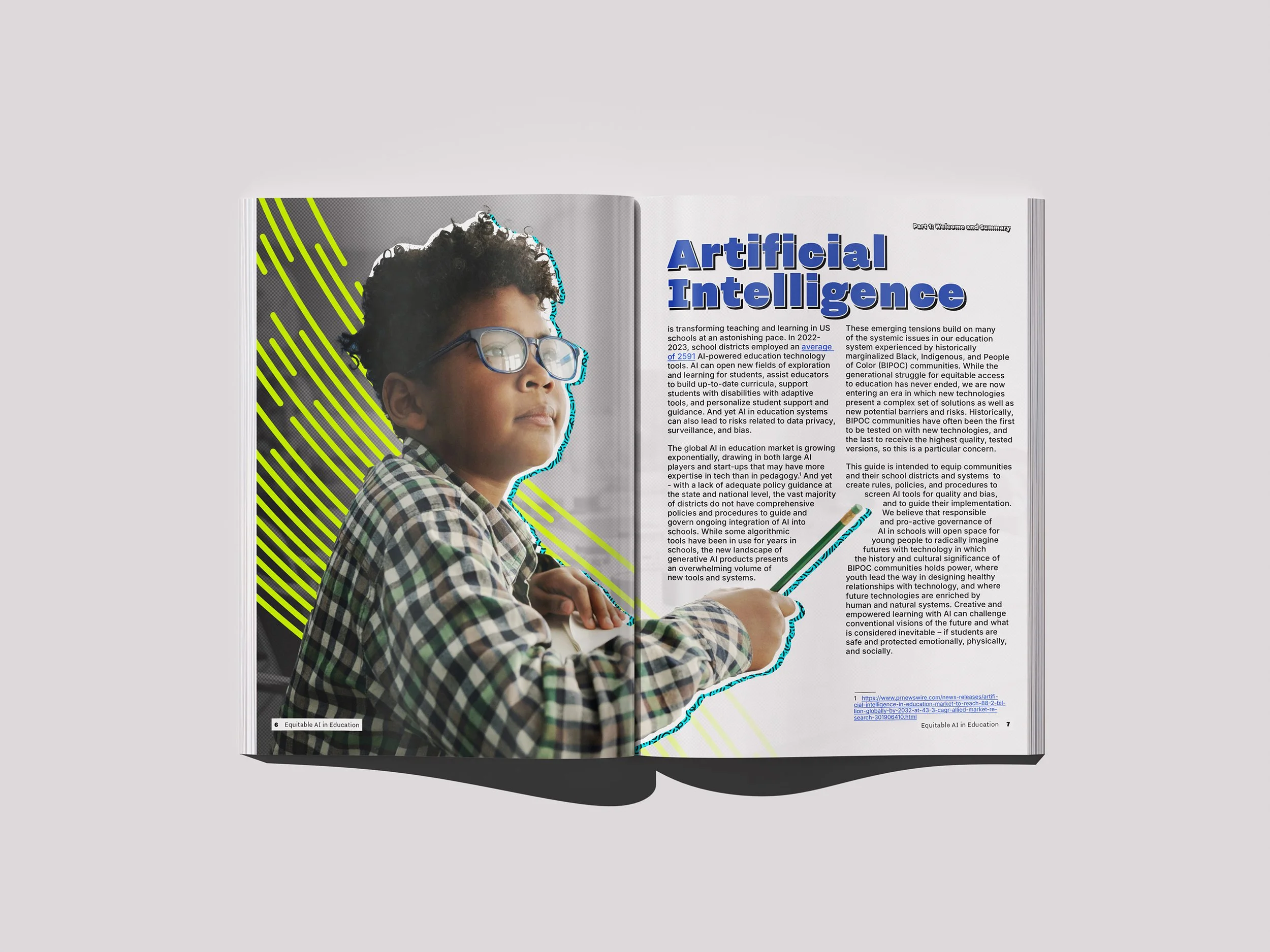
This work produced the Responsible AI in Education Guide, a public-facing roadmap designed to be visually accessible and easy to navigate, because the communities most affected by AI in schools are often the least equipped with technical knowledge or policy expertise. By clearly illustrating how AI systems operate and where communities can intervene, the guide empowers everyday stakeholders to engage confidently with school districts and policymakers. This foundation helped scale the effort into the Eyes on AI national campaign, framing AI in education as both a youth wellbeing and civil rights issue. The campaign unites stakeholders around shared Youth Wellbeing Standards for AI in Education, a framework communities can adapt to ensure technology expands rather than limits educational opportunity.